
The History of the Hotel Kärntnerhof—From Postwar Vienna to the Present Day
The history of this building is no secret—it is part of its identity. From the building dating back to 1900, through its time as a brothel during the occupation, to its current incarnation as a privately run boutique hotel on Grashofgasse: This page recounts the history of the Kärntnerhof as it has been documented—and openly acknowledges what remains unclear.

- Chronicle
- Building & Location
- Postwar Vienna
- Madame Rosa
- Renovation in 2013
- Art in the Home
- Christiane Hörbiger
- Heiligenkreuzerhof
- Sources
A House with Many Lives
Grashofgasse is a quiet side street in the heart of Vienna. Just a few steps from Wollzeile, right next to the medieval Heiligenkreuzerhof, it lies away from the main tourist crowds—and yet right in the middle of the Innere Stadt. Anyone who turns down this street will find a place that’s quieter than its surroundings. And a building whose walls hold more than one story.
The history of the Hotel Kärntnerhof does not begin with an opening date and a ribbon-cutting ceremony. It begins with a Vienna lying in ruins, with a period of occupation that transformed the cityscape and the social fabric, and with a woman who ran a brothel in this building. Later, it became a hotel. Still later—following a comprehensive renovation in 2013—it became the boutique hotel that today welcomes guests from all over the world.
This page combines storytelling with verifiable facts and clearly distinguishes between what has been confirmed and what still requires further research. The tone is respectful and objective—neither sensationalistic nor romanticized. We’ve compiled additional background information on the Press page, along with the original articles about the house; if you’d like to get to know today’s hosts, the About Us page is the place to go.
History of the House at 4 Grashofgasse
- 1900
The building at Grashofgasse 4, 1010 Vienna, is being constructed in the 1st District—right next to the medieval Heiligenkreuzerhof. Architect: Ludwig Schöne, according to building information from the City of Vienna.
- from 1945 onward
Vienna is a four-sector city. The 1st District is located in the international sector, which is under joint Allied administration—with a large presence of soldiers and administrative personnel.
- Postwar period
A woman known as “Madame Rosa” runs a brothel in the house, frequented mainly by Allied soldiers. This has been reported by, among others, SZ Magazin, oe24, VON Magazine, and Le Journal de la Maison. The exact time period is still being verified.
- since 1956
There is documented evidence that the property has been operated as a hotel. Information on previous owners is being researched and will be added as soon as it is verified.
- 1981
The Kärntnerhof is taken over by the Nagel family, who are originally from Vienna.
- April 2013
Reopening as a boutique hotel following a comprehensive renovation. Christiane Hörbiger cuts the red ribbon.
- today
41 rooms and 3 suites in the Viennese Art Nouveau style. The Madame Rosa Suite, the Dom Suite, and the Christiane Hörbiger Suite all bear the history of the city in their names.
The Building and Its Location: Grashofgasse, 1st District
The building at Grashofgasse 4 was constructed in 1900 according to plans by architect Ludwig Schöne. The street lies between Wollzeile and Schönlaterngasse, in the northern, most historic part of the 1st district. Stephansplatz is a five-minute walk away, yet the atmosphere here is different: quieter, more focused, almost village-like.
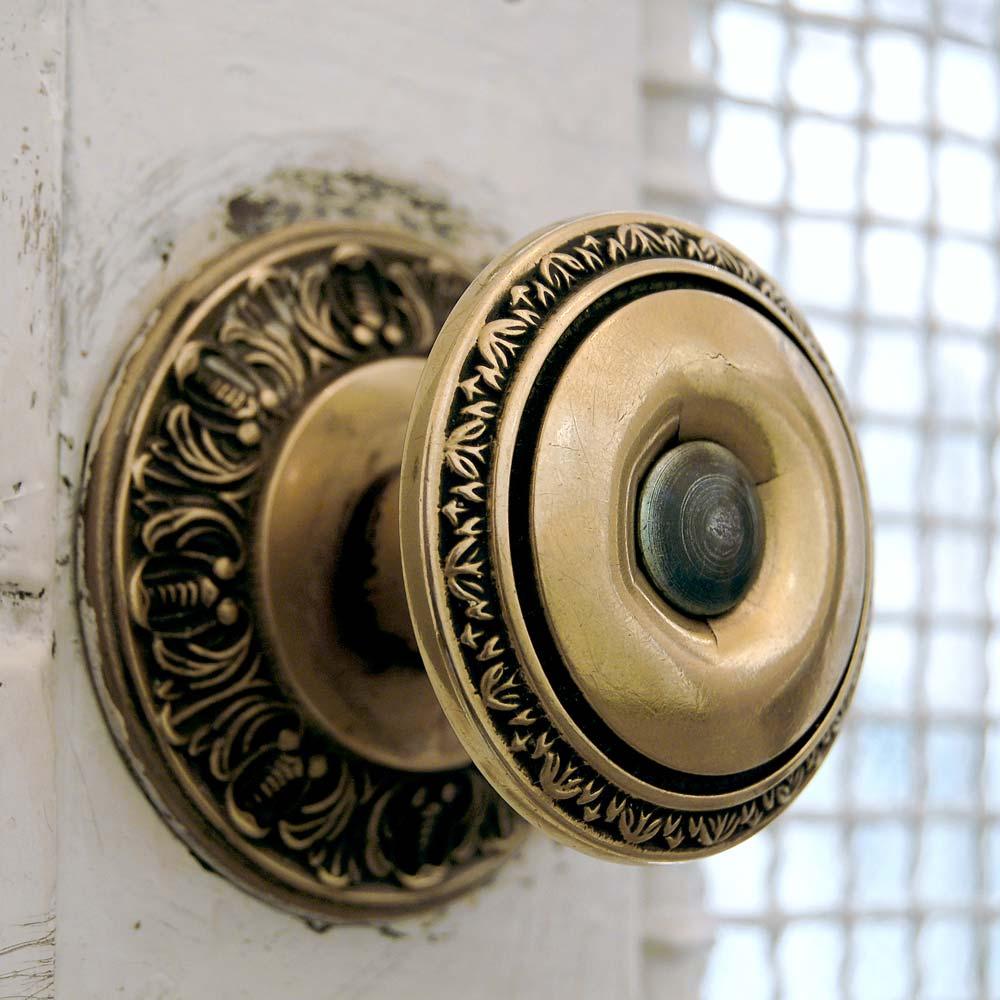
The interior is characterized by elements of Viennese Art Nouveau—whether these date back to the building’s original construction or to later renovations is currently being investigated. The design details are evident: oak parquet floors in nearly every room, English wallpaper, Italian fabrics, and carefully restored elements.
This location—central yet discreet—has benefited the building’s various uses over the decades. A brothel in a quiet side street depended on discretion just as much as today’s boutique hotel depends on tranquility. You can find more information about the surrounding area and transportation options on our Location page, and a description of the boutique character on the Boutique Hotel Vienna Center page.
Vienna After the War: What the “Four-Sector” Period Meant for the 1st District
To understand the history of the house, one must be familiar with the historical context in which it began. When World War II ended, Vienna lay in ruins. The city—much like Berlin—was divided among the four Allied powers.
- Administration
- The Soviet Union, the United States, the United Kingdom, and France each administer their own sector
- 1st District
- Special status as an international sector, jointly controlled by all four powers, with command rotating monthly
- Street scene
- A heavy presence of foreign soldiers and administrative personnel, Allied patrols—the so-called “Four in a Jeep”
- Everyday Life
- An economy of scarcity, the black market, and a society in upheaval
Women who had lost their husbands, property, and social security as a result of the war were faced with life-or-death decisions. During this period—as in many occupied European cities—sex work was an economic reality that should not be romanticized. Brothels, frequented mainly by Allied soldiers, sprang up in various parts of Vienna; the 1st district was no exception.
This social reality is rarely documented in official Viennese urban history—yet it was part of everyday life in the postwar years. The occupation ended with the Austrian State Treaty. Vienna was free once again, but traces of that decade remained in many homes and people’s lives—including at Grashofgasse 4.
Madame Rosa: The Documented Incident—and How We Deal with It Today
In the postwar period, a woman known as “Madame Rosa” ran a brothel at Grashofgasse 4. According to consistent press reports, her clientele consisted mainly of Allied soldiers stationed in the international sector of the 1st District. This episode is neither a rumor nor a legend—and the Kärntnerhof handles it differently than many other establishments would.
- What is established: The brothel’s operations are documented by several independent sources. SZ Magazin published an article by Lars Reichardt about the history of the establishment and mentioned that, even decades later, former soldiers were still asking about the women from back then. oe24 picked up the story; VON Magazine covered it on the occasion of the reopening; and Le Journal de la Maison included it in a profile of the establishment.
- What we do not claim: We have no personal details about the women who worked in the house, and we do not speculate about their living conditions, motives, or life stories. The name “Madame Rosa” has also been passed down as the business name—it is not certain whether this was her real name or a nickname. Research is still underway to determine when the business began and when it ended.
- Why we’re talking about this: The Kärntnerhof treats this chapter neither as a scandal nor as a selling point. It is a historical fact that is part of the hotel’s history. The decision to talk about it stems from a clear stance: appreciation rather than glorification, acknowledgment rather than concealment.
So why is a suite named after a brothel owner? Guests ask this question regularly—and it deserves an honest answer. The Madame Rosa Suite, measuring about 37 m², was not named to provoke, but to commemorate. The decor speaks to the present; the name speaks to the past. The two go hand in hand.
The 2013 Renovation and “Vienna’s Smallest Grand Hotel”
In April 2013, the Kärntnerhof reopened its doors following a comprehensive redesign. What followed was more than just a renovation—it was a reinvention of the hotel that did not obscure its history but rather brought it to light. Three people played a key role in the redesign:
- Niccolò Grassi
- Italian designer who previously worked for Ferragamo, among others. He designed most of the furniture and lamps in the hotel. His design concept blended Viennese Art Nouveau with French flair and Italian elegance.
- Eline de Potter
- Belgian art curator. She was in charge of the hotel’s private art collection and the color schemes of the rooms.
- Nicole Nagel
- Owner of the hotel, creative director. Her vision: a hotel that sees itself as “Vienna’s smallest Grand Hotel”—not in size, but in spirit.
The artisanal details speak for themselves: wood paneling from a Tuscan workshop in green-gray Art Nouveau hues, armchairs and sofas from a Belgian furniture maker, handcrafted Florentine furniture accessories, and wallpaper by Farrow & Ball, Osborne & Little, and Sandberg. Every detail has been carefully selected, not merely thrown together. You can read more about the hostess and the current team on the About Us page.
Art in the House: Humboldt as the Common Thread
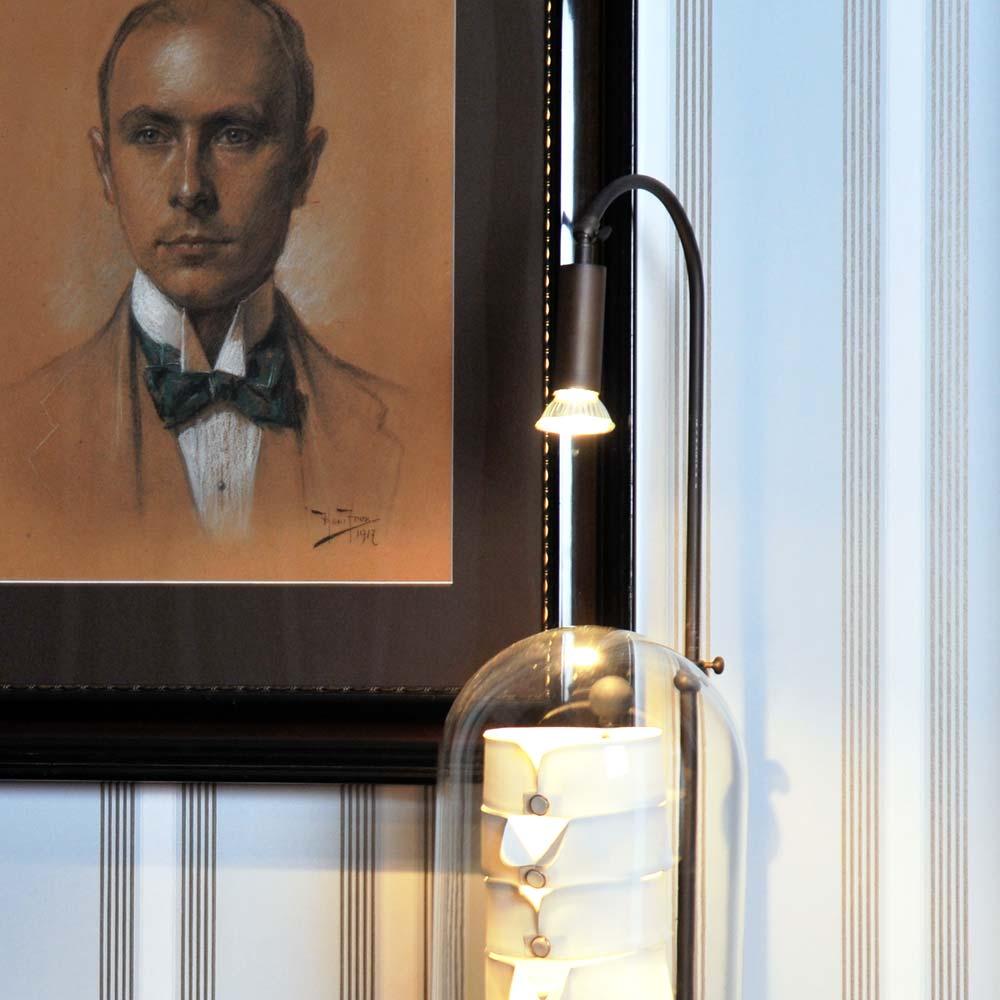
A recurring theme in Eline de Potter’s curatorial work is the world of naturalists—inspired by Alexander von Humboldt. Images of animals, butterflies under glass domes, birds, ostrich eggs, and dried seaweed appear throughout the rooms as subtle narrative elements.
These objects aren’t just decorative wall hangings; they tell a story. Anyone walking through the hallways of the Kärntnerhof will find a piece of this collection in almost every room—framed portraits next to glass cases, drawings next to found objects. It’s the same approach the hotel takes toward its own past: collecting, organizing, and displaying.
Christiane Hörbiger and the Kärntnerhof
In April 2013, it was Christiane Hörbiger who cut the red ribbon at the official reopening. The grande dame of Austrian and German-language cinema thus sent a clear signal marking a new beginning for the theater—and she did so as a neighbor: she lived in the adjacent Heiligenkreuzerhof.
The hotel’s largest suite, measuring approximately 52 m², is named after her. It features a portrait of the actress, photographed by Elfi Semotan—one of Austria’s most renowned photographers. The Christiane Hörbiger Suite pays homage to an artist whose life was more closely tied to Vienna than that of almost anyone else.
Any connections beyond the opening and the naming of the suite are deliberately not claimed here. What is documented is her role in the 2013 opening and the suite dedicated to her.
The Heiligenkreuzerhof: A Medieval Neighborhood Right Next Door
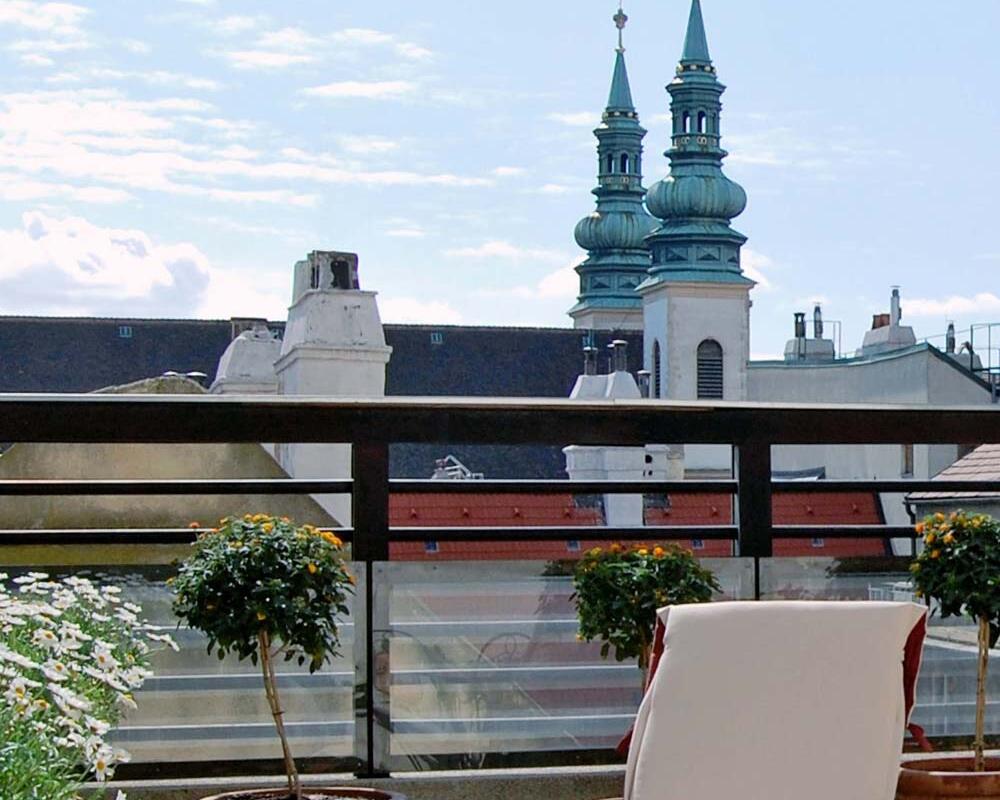
Anyone walking down Grashofgasse will almost inevitably pass the entrance to the Heiligenkreuzerhof—one of Vienna’s oldest surviving courtyards. First mentioned in a document from 1242 as a farmstead belonging to the Heiligenkreuz Abbey, it is essentially considered the oldest surviving tenement building in Vienna. Important: It is a separate building next door and should not be confused with the hotel building.
The estate itself is a peaceful place: old walls, a well-kept courtyard, and St. Bernadette’s Chapel with its Baroque frescoes. In the summer, small classical concerts are held here regularly—not large-scale events, but intimate performances in a setting that feels like a time capsule.
For the history of this building, this neighborhood is more than just a footnote. The Middle Ages alongside the postwar era, Baroque frescoes alongside Art Nouveau wallpaper, a monastery courtyard alongside a boutique hotel: Vienna rarely tells its stories in a straight line—here, it tells them within just a few meters. You can find more quiet spots nearby in our article “Vienna’s Hidden Gems Away from the Tourists.”
Sources and Context
Transparency is a core value of this organization. That is why we disclose the sources on which the story told here is based—and where we are still filling in the gaps. All press articles are available or referenced on our press page.
| Source | What it stands for |
|---|---|
| Building Information from the City of Vienna | Built in 1900, architect Ludwig Schöne |
| SZ Magazine (Lars Reichardt) | Madame Rosa and the Building’s Brothel History |
| VON Magazine | Profile on the Occasion of the Reopening |
| hotelier.de | Opened in 2013, Design Team: Christiane Hörbiger |
| oe24 | Articles related to the brothel’s past |
| The House Journal | Portrait with Historical Context |
| The Irish Times | Listed as a historic building in the 1st district |
| fine HOTEL | Reopening Report |
Outstanding items – will be verified and supplemented
- Exact period during which the brothel operated under the name “Madame Rosa”
- Interim owners prior to 1981
- Scope and timing of previous renovations prior to 2013
This page will be updated as soon as additional facts are confirmed. We welcome information from archives, eyewitnesses, or documented sources—please submit it via our contact form.
Frequently Asked Questions About the History of the Hotel Kärntnerhof
What is the history of the Hotel Kärntnerhof in Vienna?
The building at Grashofgasse 4, 1010 Vienna, was constructed in 1900 according to plans by architect Ludwig Schöne. In postwar Vienna, a woman known as “Madame Rosa” ran a brothel here that was frequented mainly by Allied soldiers. The building has been operated as a hotel since 1956 and has been owned by the Nagel family since 1981. In April 2013, it reopened as a boutique hotel in the Viennese Art Nouveau style—with 41 rooms and 3 suites.
Why is there talk of a brothel scandal at the Kärntnerhof?
Because the building at Grashofgasse 4 was in fact used as a brothel in the postwar period. This history is documented by several news sources, including SZ Magazin and oe24. The hotel communicates this past openly and objectively—as part of its identity, not as a scandal.
Who was “Madame Rosa”?
“Madame Rosa” is the name under which a brothel was operated at Grashofgasse 4 in the postwar period. It is not clear whether this was a personal name or a business name. According to press reports, the clientele consisted mainly of Allied soldiers during the occupation of Vienna. Today, the Madame Rosa Suite commemorates this woman and that era. The exact years of operation are still being verified.
When was the building at Grashofgasse 4 built?
The building was constructed in 1900 based on plans by architect Ludwig Schöne—this information comes from the City of Vienna’s building database.
What role did Christiane Hörbiger play at the Hotel Kärntnerhof?
Christiane Hörbiger cut the red ribbon in April 2013 at the official reopening. The hotel’s largest suite, measuring approximately 52 m², is named in her honor; a portrait of her, photographed by Elfi Semotan, hangs in the suite. Beyond these documented connections, no further claims are made.
Where is the Kärntnerhof located—and what is the Heiligenkreuzerhof?
The hotel is located at Grashofgasse 4 in the northern, most historic part of Vienna’s 1st district—on a quiet side street, just a five-minute walk from Stephansplatz. Right next door is the Heiligenkreuzerhof, a medieval courtyard belonging to Heiligenkreuz Abbey, featuring the St. Bernadette Chapel and Baroque frescoes. In the summer, small classical concerts are held there.
What sources are available on the history of the house?
The documented history is based on building information provided by the City of Vienna, as well as reports in SZ Magazin, VON Magazine, hotelier.de, oe24, Le Journal de la Maison, and The Irish Times. All sources are available or referenced on the hotel’s press page.
Discover More
The Press page brings together all the original articles about the hotel. If you’d like to get to know today’s hosts, you can find them under “About Us.” The three historic suites are named after entries in this chronicle; all room categories and rates are listed in the Room Overview.
Stay the Night in a Piece of Vienna’s History
You can do more than just read this story—you can experience it firsthand in a house that visibly preserves its past. Book directly through our website to get the best available rate.